

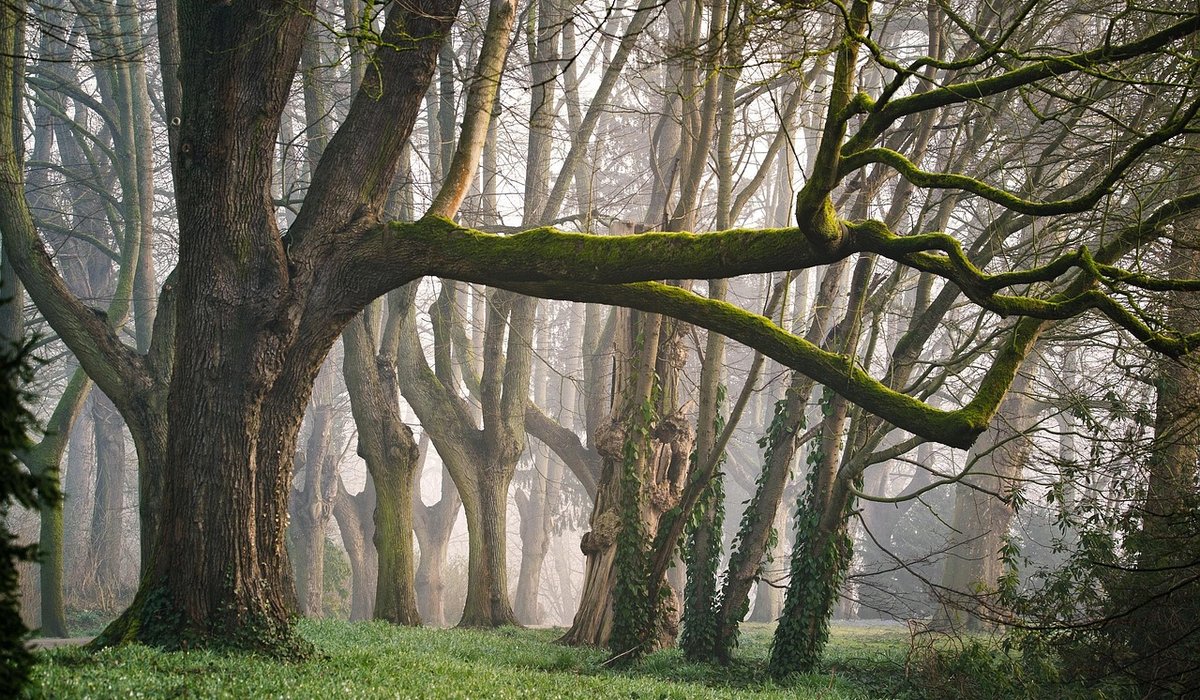
Folk horror does not need severed limbs or sudden screams. Its deepest unease comes from the ordinary turned slightly wrong: a pub sign that creaks in a wind you cannot feel, a footpath on no map, a neighbour who answers a question you did not ask. When you write British folk horror, your greatest ally is specificity. Weather, dialect, and half-remembered customs are not decoration. They are the load-bearing walls of dread. The reader trusts a world that smells of wet wool and bracken, and that trust makes the wrongness hit harder when it arrives.
Forget lightning and thunder. British weather is a slow, pervasive character. A fine, persistent drizzle – the kind that soaks through a coat without becoming rain – does more for unease than any storm. It limits visibility, muffles sound, and makes everything feel damp and close. Use the haar off the North Sea, the mizzle of the Pennines, the sea fret that swallows a Cornish cove by mid-afternoon. These are not dramatic events; they are conditions that erode certainty.
Be specific about sensory detail. Wet slate smells different from wet limestone. Fog makes a church bell sound flat and far away. A sudden drop in temperature on a still day can signal something unseen. Let your characters comment on the weather in passing – "It's close today, isn't it?" – and let that closeness become sinister. The reader will feel the pressure before they understand the cause.
British folklore is rooted in place. A holloway – a sunken lane worn deep by centuries of feet and carts – feels like a throat in the earth. An ancient yew in a churchyard, its branches propped up by wooden struts, looks like something that has been waiting. A saltmarsh at dusk, with its shifting channels and sucking mud, is a landscape that does not care if you leave. Use these real features, but describe them with an eye for the odd detail: a single sheep's skull on a gatepost, a line of stones that does not quite form a circle, a rusted iron gate that opens onto a field with no path.
Let the landscape hold evidence of old use. Ridge and furrow under the grass. A fallen standing stone half-buried in a hedgerow. These are not props; they are witnesses. Your characters might notice them and shrug, but the reader will feel the weight of time pressing down.
Local dialect is a powerful tool for atmosphere because it signals belonging and exclusion. A farmer who says "I'll do it while I'm nithered" is not just cold; he is shaped by a place. A stranger who repeats the phrase wrongly is marked. Use dialect sparingly and accurately – boggart, barghest, yallery brown, mardy, owt, nowt. Do not overdo it, or the prose becomes a pantomime. Instead, let a single unfamiliar word sit in a sentence like a stone in a shoe.
The real unease comes from what dialect conceals. A local might say, "We don't talk about the quarry up yonder," and then change the subject. The dialect word for a particular field or a particular sound – a word that has no English equivalent – hints at a knowledge your protagonist will never fully share. That half-understanding is more frightening than any translation.
Folk horror thrives on rituals that have lost their meaning. A village still decorates a well, but no one remembers which saint it was for. A group of children still sings a rhyme at the turning of the year, but one line is always mumbled. The unease is not that the custom is strange; it is that the custom is almost familiar. You can use real British traditions – well-dressing, beating the bounds, soul-caking, wassailing – but strip them of their context. What if the wassailers arrive at a house that has been empty for years? What if the well-dressing uses flowers that do not grow in that season?
The most unsettling details are the ones that suggest a rule has been broken. A stone circle with one stone removed. A maypole with no ribbons. A graveside where the headstone faces the wrong way. Your characters might not know the rule, but they feel its absence like a missing tooth.
When you are building atmosphere, ask yourself these questions:
Use these details like seasoning. A pinch of dialect, a sentence of weather, a glance at a landscape that does not quite fit. The reader will fill the silence with their own fears. That is the heart of folk horror: not the monster, but the moment before you know what the monster is. Keep it small, keep it true, and let the unease grow from the ground up.

Fableherald No rushing, no fuss — just thoughtful notes and practical help, written by people who care.

Fableherald An honest, everyday look at the things that make life a little better — with advice you can actually use.

Contemporary poets and novelists return to murder ballads and tragic romances, testing whether ancient stories can speak clearly to present-day readers.

Comments
ALina Kelian
19th May 2018 ReplyFableherald Simple, genuine and looked after with care — the kind of place worth returning to. ullamco laboris nisi ut aliquip ex ea commodo consequat.
Rlex Kelian
19th May 2018 ReplyFableherald No rushing, no fuss — just thoughtful notes and practical help, written by people who care. ullamco laboris nisi ut aliquip commodo.
Roboto Alex
21th May 2018 ReplyFableherald Simple, genuine and looked after with care — the kind of place worth returning to. ullamco laboris nisi ut aliquip ex ea commodo consequat.